

THK BL14BD Link Ball | THK BL14BD Distributor
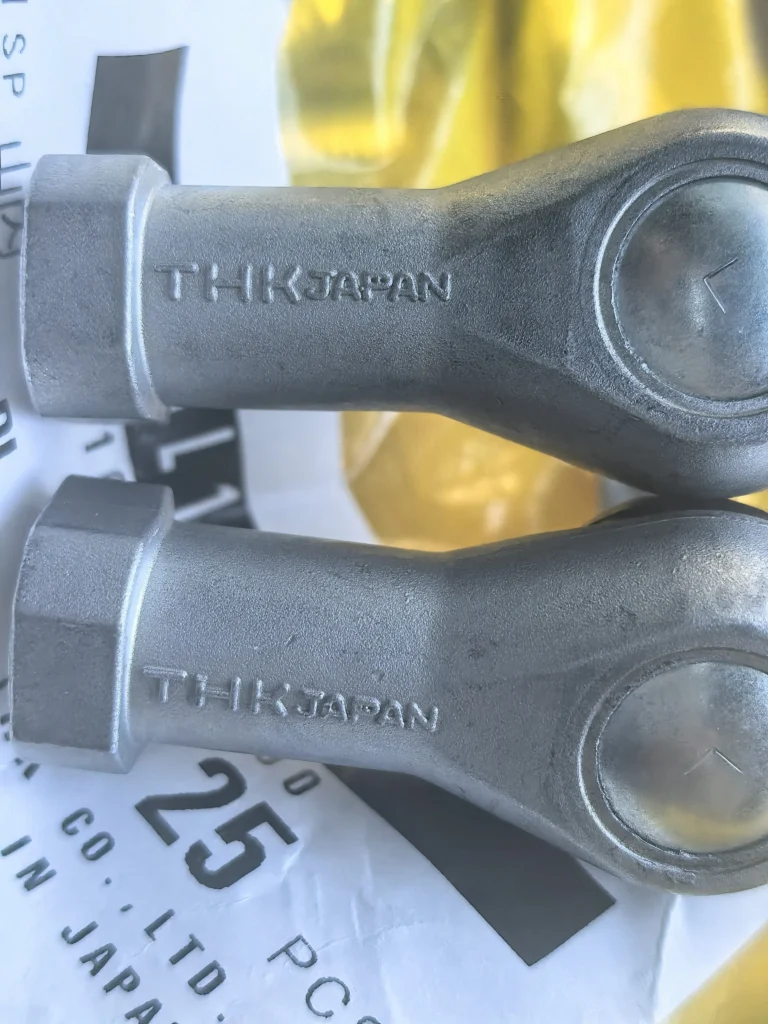
Product name:THK BL14BD Link Ball | THK BL14BD Distributor
Materials:Bearing steel
Availability:In stock
Price: send email to: sale@noksbearings.com
Clicks:1991
Editor:admin
Product Detail:
More about: THK BL14BD Link Ball | THK BL14BD Distributor
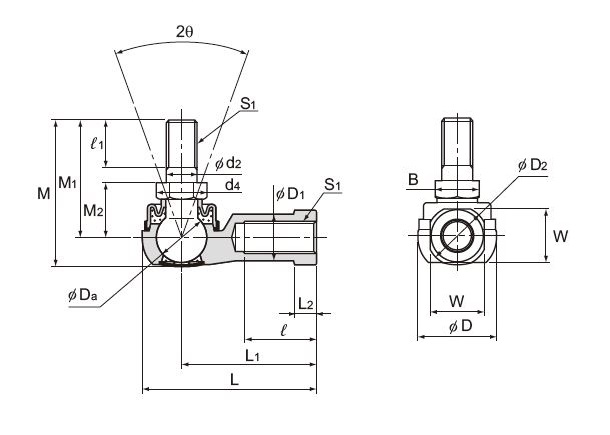
| Model No. | Outer dimensions | Threaded S1 JIS Class 2 |
Holder dimensions | Ball shank dimensions | Ball diameter Da |
Permissible tilt angles 2θ° |
Applied static load Cs |
Yield point strength Pk 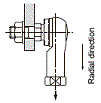 |
Mass | ||||||||||||
| Length L |
Diameter D |
Height M |
L1 | l | L2 | D1 | D2 | W 0 -0.3 |
d2 h9 |
M1 | M2 ±0.3 |
l1 | Hexagon B 0 -0.3 |
d4 | |||||||
| mm | mm | mm | mm | mm | mm | mm | mm | mm | mm | mm | mm | mm | mm | mm | mm | degree | N | N | g | ||
| BL4DA | 24.5 | 13 | 20 | M4×0.7 | 18 | 8 | 4 | 7.5 | 9.5 | 8 | 4 | 15 | 7 | 6 | 7 | 8.1 | 7.938 | 40 | 4510 | 1370 | 7 |
| BL5DA | 34.5 | 15 | 26.7 | M5×0.8 | 27 | 15 | 4 | 9 | 12 | 10 | 5 | 21 | 10 | 8 | 8 | 9.2 | 9.525 | 40 | 6470 | 2250 | 12 |
| BL6D | 38 | 16 | 32.6 | M6×1 | 30 | 16 | 5 | 10 | 13 | 11 | 6 | 26 | 11 | 11 | 10 | 11.6 | 11.112 | 40 | 9900 | 3920 | 26 |
| BL8D | 45.5 | 19 | 38.6 | M8×1.25 | 36 | 19 | 6 | 12.5 | 16 | 14 | 8 | 31 | 14 | 12 | 12 | 13.8 | 12.7 | 40 | 12500 | 6570 | 49 |
| BL10D | 55.5 | 25 | 46.3 | M10×1.25 | 43 | 23 | 7 | 14.5 | 19 | 17 | 10 | 37 | 17 | 15 | 14 | 16.2 | 15.875 | 40 | 18300 | 11300 | 87 |
| BL10BD | 55.5 | 25 | 52.3 | M10×1.5 | 43 | 23 | 7 | 14.5 | 19 | 17 | 10 | 43 | 17 | 21 | 14 | 16.2 | 15.875 | 40 | 18300 | 11300 | 90 |
| BL12D | 64.5 | 29 | 52.7 | M12×1.25 | 50 | 26 | 8 | 17.5 | 22 | 19 | 12 | 42 | 19 | 17 | 17 | 19.6 | 19.05 | 40 | 26700 | 16400 | 143 |
| BL12BD | 64.5 | 29 | 59.7 | M12×1.75 | 50 | 26 | 8 | 17.5 | 22 | 19 | 12 | 49 | 19 | 24 | 17 | 19.6 | 19.05 | 40 | 26700 | 16400 | 148 |
| BL14D | 74 | 34 | 68.4 | M14×1.5 | 57 | 30 | 10 | 20 | 25 | 22 | 14 | 56 | 21.5 | 22 | 19 | 21.9 | 22.225 | 40 | 36400 | 19800 | 235 |
| BL14BD | 74 | 34 | 74.4 | M14×2 | 57 | 30 | 10 | 20 | 25 | 22 | 14 | 62 | 21.5 | 28 | 19 | 21.9 | 22.225 | 40 | 36400 | 19800 | 245 |
| BL16D | 83 | 38 | 74 | M16×1.5 | 64 | 34 | 11 | 22 | 27 | 24 | 16 | 60 | 23.5 | 23 | 22 | 25.4 | 22.225 | 30 | 36400 | 26900 | 315 |
| BL16BD | 83 | 38 | 80 | M16×2 | 64 | 34 | 11 | 22 | 27 | 24 | 16 | 66 | 23.5 | 29 | 22 | 25.4 | 22.225 | 30 | 36400 | 26900 | 325 |
Application of THK THK BL14BD
THK BL14BD is a radial-direction Link Ball designed for articulated mechanical connections that require angular movement, compact installation, and reliable load transmission. It features an M14 × 2 male thread, a 22.225 mm ball diameter, and a 40° permissible tilt angle.
With an applied static load of 36,400 N and a yield point strength of 19,800 N, the BL14BD is suitable for relatively high-load mechanical linkage applications where an M14 × 2 threaded connection is required.
Machine Tools and Mechanical Linkages
THK BL14BD can be used in mechanical linkage assemblies for machine tools and industrial machinery where connected components need to accommodate angular movement.
Typical applications include mechanical linkages, adjustment mechanisms, actuator connections, lever mechanisms, and articulated assemblies. The spherical joint allows connected components to accommodate changes in alignment during operation.
Automation and Actuation Systems
In automated equipment, Link Balls can connect actuators, rods, levers, brackets, and other moving components.
The BL14BD provides a relatively large spherical connection for applications requiring an M14 × 2 threaded connection. Its angular movement capability can help accommodate alignment changes between connected components during an operating cycle.
Mechanical Control and Transmission Mechanisms
The BL14BD can be used in mechanical control and transmission systems where movement needs to be transferred between components through an articulated connection.
Possible applications include control linkages, lever mechanisms, position-adjustment systems, actuator linkages, and mechanical transmission assemblies.
The radial-direction design is suitable for applications where the primary load is supported around the spherical joint.
Automotive and Transportation Equipment
THK Link Balls can be used in automotive-related linkage mechanisms where compact articulated connections are required.
The BL14BD can be considered for mechanical systems that require angular movement between rods, brackets, or other connected components and where the M14 × 2 thread size is suitable for the installation design.
Industrial Machinery and High-Load Linkages
With an applied static load of 36,400 N and a yield point strength of 19,800 N, THK BL14BD is suitable for mechanical linkage applications requiring a relatively high-strength spherical connection.
Potential applications include industrial machinery, actuator mechanisms, mechanical control systems, equipment adjustment mechanisms, and other articulated assemblies subject to relatively high mechanical loads.
BL14BD vs. BL14D
The main difference between THK BL14BD and BL14D is the thread specification. Both models use a 22.225 mm ball diameter, have a 40° permissible tilt angle, and have the same applied static load and yield point strength.
Model Thread Ball Diameter Permissible Tilt Angle Applied Static Load Yield Point Strength Mass
THK BL14D M14 × 1.5 22.225 mm 40° 36,400 N 19,800 N 235 g
THK BL14BD M14 × 2 22.225 mm 40° 36,400 N 19,800 N 245 g
When replacing an existing Link Ball, the thread pitch should be checked carefully. BL14D and BL14BD have the same ball diameter and load specifications, but their thread pitches are different and they should not be considered directly interchangeable without checking the mating component.
Selection Considerations for THK BL14BD
Before selecting BL14BD, check the following operating conditions:
Required radial load
M14 × 2 thread compatibility
Required angular movement
Available installation space
Direction and magnitude of the applied load
Operating frequency and movement conditions
Lubrication requirements
Environmental conditions
Required service life
For applications involving continuous oscillation, impact loads, or significant vibration, the actual operating conditions should be evaluated against the manufacturer’s specifications before final selection.